Scalable SiC-based quantum sensors are well suited for high-volume markets such as the automotive industry as well as IoT and IoE applications. Their compatibility with standard semiconductor manufacturing processes enables cost-effective large-scale implementation.
QVOL‑2 — Quantum Sensors for Scalable Applications
The QVOL‑2 project aims to advance quantum sensing toward market deployment. Building on the first QVOL phase, the focus is on enabling technologies for solid-state defect sensors in silicon carbide, with an emphasis on scalability and energy efficiency. In addition, new defect types such as divacancies are being investigated to increase sensor sensitivity.
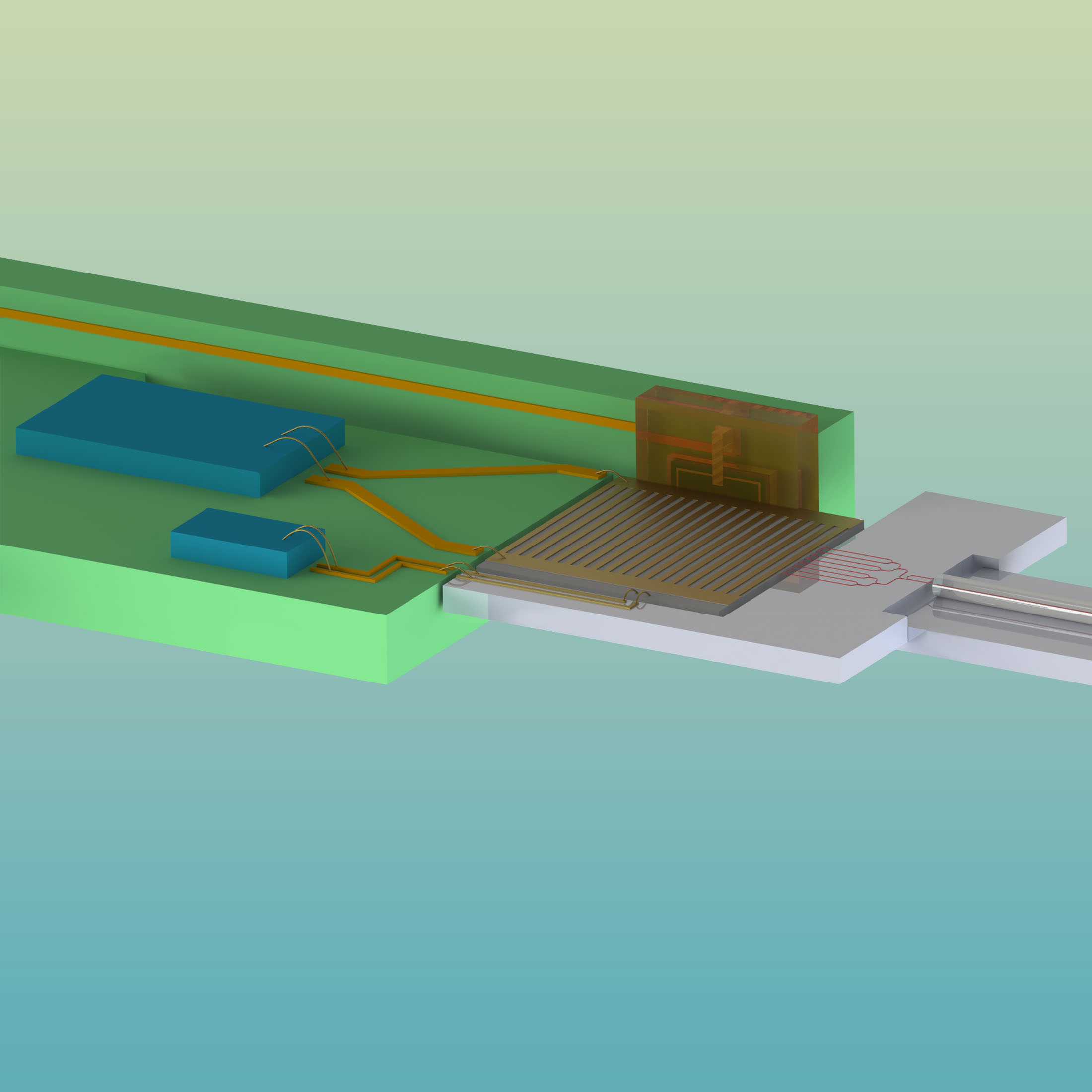
The project focuses on solid-state defect sensors that operate at room temperature and offer high integration capability and scalability. Key technological priorities include material characterization, defect generation, optimization of excitation and readout, investigation of photonic wire bonds, and overall system integration. The goal is the industrial high-volume production of quantum sensors.

TEAM